Advaita Vedanta, one of the most profound schools of Indian philosophy, is rooted in the ancient Vedic traditions and offers a path to spiritual liberation through the realization of the non-dual nature of reality. The term “Advaita” means “non-duality,” and “Vedanta” refers to the culmination of knowledge found in the Vedas, the oldest scriptures of Hinduism. Together, Advaita Vedanta teaches that the true nature of existence is singular, and the ultimate reality, Brahman, is beyond any division or duality.
The philosophical system was most famously articulated by the sage Adi Shankaracharya in the 8th century CE, who consolidated and revived the tradition of Advaita Vedanta. He traveled across India, engaging in debates and discussions to spread the message of non-duality. Through his commentaries on the Upanishads, Bhagavad Gita, and Brahma Sutras, Shankaracharya emphasized the unity of Atman (the individual soul) and Brahman (the supreme, formless reality).
At the core of Advaita Vedanta is the assertion that the apparent world of multiplicity and diversity is an illusion (Maya). The true essence of all things is Brahman, an absolute, infinite, and unchanging reality. The perception of separateness and duality arises from ignorance (Avidya), which clouds the true understanding of one’s divine nature. According to Advaita, once an individual realizes that their true self (Atman) is not different from Brahman, they attain moksha, or liberation from the cycle of birth and death (samsara).
Advaita Vedanta teaches that the path to realization is through knowledge (Jnana) and self-inquiry. The practice of neti neti (not this, not this) is used to eliminate false identifications with the body, mind, and emotions, leading to the direct experience of oneness with the Supreme. Meditation, contemplation, and the guidance of a realized teacher (guru) are essential in this journey.
Though Advaita Vedanta holds a monistic view of reality, it does not deny the practical aspects of life. It encourages living in harmony with the world, while recognizing the ultimate truth beyond appearances. Through the teachings of Advaita, seekers are invited to transcend the illusion of duality and experience the bliss of unity with all that is.
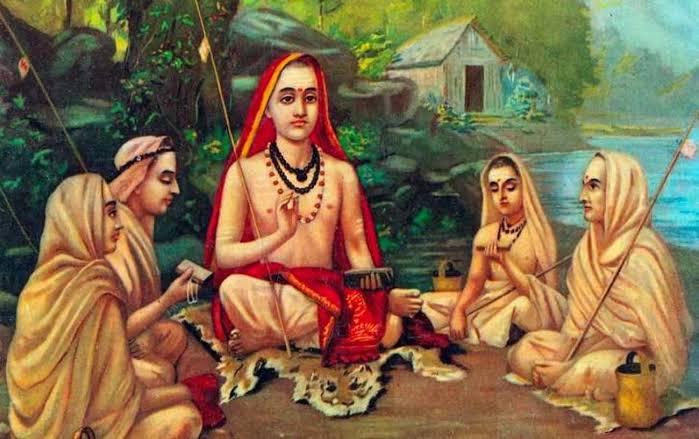
Advaita Vedanta: A Path to Spiritual Realization
Advaita Vedanta Advaita Vedanta and enlightenment Advaita Vedanta and self-inquiry Advaita Vedanta for inner peace. Advaita Vedanta meditation Advaita Vedanta principles Advaita Vedanta scriptures Advaita Vedanta teachings Atman and Brahman unity Brahman in Advaita Vedanta knowledge in Advaita Vedanta liberation through Advaita Vedanta non-dual philosophy non-duality in Advaita oneness with the divine in Advaita path to moksha self-realization through Advaita Vedanta spiritual awakening in Advaita Vedanta spiritual realization in Advaita Vedanta teachings of Adi Shankaracharya understanding the self in Advaita Vedanta Vedanta philosophy Vedantic meditation practices